
You’re investing significant time and money into your astrophotography setup, so your guiding system can’t afford to underperform. The right guide scope makes the difference between sharp, perfectly tracked images and frustrating failures during long exposures. With apertures, focuser types, and camera compatibility varying widely across models, you’ll need to understand which features actually matter for your specific setup.
| SVBONY SV165 Mini Guide Scope 30mm F4 | 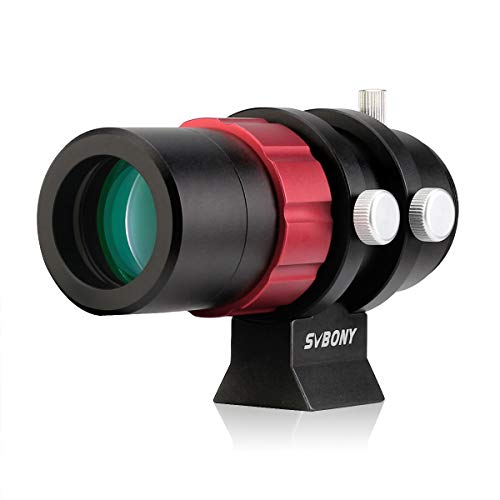 | Best Compact Guide | Aperture Size: 30mm | Focusing Mechanism: Fixed focus with 45mm back focus distance | Camera Compatibility: ZWO, QHY, Orion auto-guiding cameras; 1.25″ and M42 mounts | CHECK ON AMAZON | Read Our Analysis |
| SVBONY SV106 Guide Scope with Helical Focuser (60mm) | 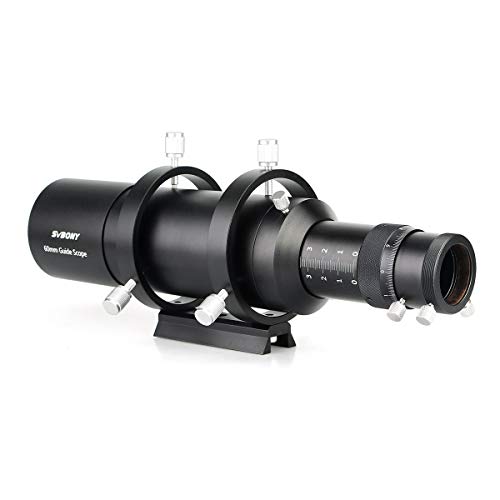 | Best Overall Performance | Aperture Size: 60mm | Focusing Mechanism: Helical focuser with 8mm travel and 35mm drawtube extension | Camera Compatibility: Auto-guider devices with female T-threads; optional 1.25″ eyepiece | CHECK ON AMAZON | Read Our Analysis |
| SVBONY SV165 40mm Mini Guide Scope for Telescopes |  | Best With Accessories | Aperture Size: 40mm | Focusing Mechanism: Front focuser with scale and two T2 extension tubes | Camera Compatibility: SV305 Pro, Orion, ZWO, QHY auto-guiding cameras; 1.25″ and M42 interfaces | CHECK ON AMAZON | Read Our Analysis |
| SVBONY SV905C Guide Camera for Astrophotography |  | Best Guide Camera | Aperture Size: N/A (guide camera, not scope) | Focusing Mechanism: N/A (guide camera, not scope) | Camera Compatibility: PHD2, MDL, NINA, SKY-X software; ST4 guide interface | CHECK ON AMAZON | Read Our Analysis |
| Astromania 50mm Guide Scope Kit for Telescopes |  | Best Budget Option | Aperture Size: 50mm | Focusing Mechanism: Worm focuser with 40mm focusing range and helical adjustment | Camera Compatibility: Standard guide camera attachments; 1.25″ eyepieces | CHECK ON AMAZON | Read Our Analysis |
| Astromania 60mm Guide Scope with Helical Focuser |  | Best Value Guide | Aperture Size: 60mm | Focusing Mechanism: Worm focuser with 45mm range and helical micro-focus | Camera Compatibility: 1.25″ eyepieces; standard guide camera attachments | CHECK ON AMAZON | Read Our Analysis |
| Astromania 70mm Guide Scope with Helical Focuser Kit |  | Best Wide Field | Aperture Size: 70mm | Focusing Mechanism: Worm focuser with 90mm range and 10mm helical adjustment | Camera Compatibility: 1.25″ eyepieces; standard auto-guiding cameras; Synta-style plates | CHECK ON AMAZON | Read Our Analysis |
| SVBONY SV106 Guide Scope Helical Focuser (50mm) | 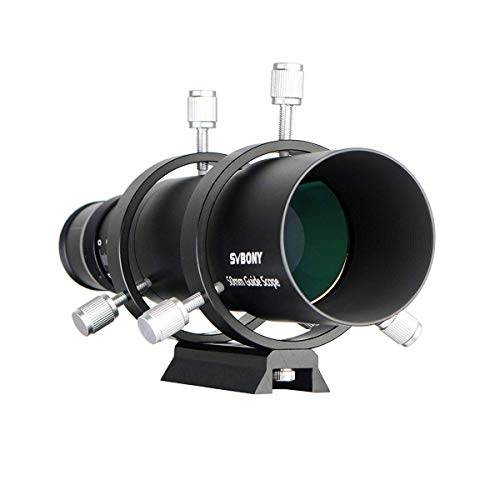 | Most Versatile Setup | Aperture Size: 50mm | Focusing Mechanism: Helical focuser with 8mm travel and 30mm drawtube extension | Camera Compatibility: Female T-thread guide cameras; optional 1.25″ eyepiece | CHECK ON AMAZON | Read Our Analysis |
| Sky-Watcher EvoGuide 50DX Guide Scope Refractor |  | Best Premium Optics | Aperture Size: 50mm | Focusing Mechanism: 1.25″ helical focuser | Camera Compatibility: 1.25″ helical focuser; optional astrograph adapters; T-threads | CHECK ON AMAZON | Read Our Analysis |
| SVBONY SV105 Telescope Camera USB3.0 Astrophotography | 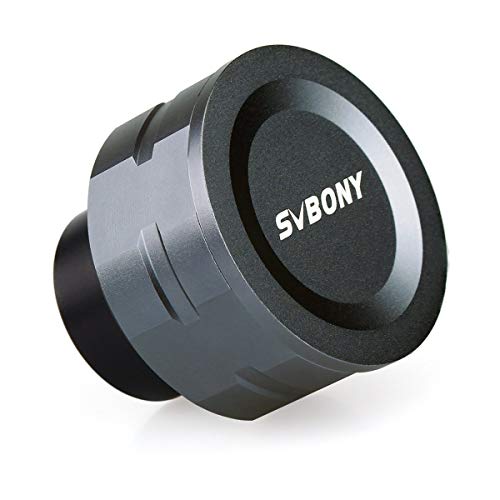 | Best Beginner Camera | Aperture Size: N/A (guide camera, not scope) | Focusing Mechanism: N/A (guide camera, not scope) | Camera Compatibility: 1.25″ eyepiece size; M28.5×0.6 filter threads | CHECK ON AMAZON | Read Our Analysis |
More Details on Our Top Picks
SVBONY SV165 Mini Guide Scope 30mm F4
Looking for a compact guide scope that won’t weigh down your astronomy setup? The SVBONY SV165 delivers impressive performance in a lightweight package. Its 30mm achromatic optics with F4 aperture and fully multilayer coated lens produce bright, clear images while minimizing reflections. You’ll appreciate the 45mm back focus distance for precise focusing and the 1.25-inch and M42 mount interfaces for versatile compatibility. The precision CNC metal construction feels solid, and nylon-tipped thumbscrews protect your equipment. At just 12.1 ounces, it pairs excellently with auto guiding cameras from ZWO, QHY, and Orion. With 4.6/5 stars from nearly 500 reviews, it’s earned its ranking as a top guide scope choice.
- Aperture Size:30mm
- Focusing Mechanism:Fixed focus with 45mm back focus distance
- Camera Compatibility:ZWO, QHY, Orion auto-guiding cameras; 1.25″ and M42 mounts
- Focal Length:Not specified (F4 aperture)
- Mounting System:1.25″ and M42 mounts; nylon-tipped thumbscrews; adjustable position
- Build Quality & Materials:CNC metal processing; nylon-tipped screws; delicate, solid construction
- Additional Feature:Ultra wide band multilayer coated
- Additional Feature:45mm back focus distance
- Additional Feature:Nylon-tipped thumbscrews
SVBONY SV106 Guide Scope with Helical Focuser (60mm)
Want a guide scope that won’t rotate your field of view during focusing? The SVBONY SV106’s helical focuser preserves star orientation while you adjust focus, making it ideal for autoguiding. With 60mm aperture, you’ll capture brighter guide stars for more reliable tracking. The 8mm helical travel plus 35mm extra back-travel accommodates most autoguider cameras comfortably. Male T-threads ensure secure attachment, while the compression ring protects your equipment from scratches. You can also use it as a straight-through finder with a 25mm eyepiece for 9.6x magnification. At 1.74 pounds, it’s portable yet capable.
- Aperture Size:60mm
- Focusing Mechanism:Helical focuser with 8mm travel and 35mm drawtube extension
- Camera Compatibility:Auto-guider devices with female T-threads; optional 1.25″ eyepiece
- Focal Length:Not specified
- Mounting System:Dovetail mount; compression ring fitting
- Build Quality & Materials:Metal construction; compression ring protection
- Additional Feature:Field orientation preservation technology
- Additional Feature:Male T-threads on focuser
- Additional Feature:35mm extra back-travel
SVBONY SV165 40mm Mini Guide Scope for Telescopes
Need a compact guiding solution that won’t break the bank or weigh down your telescope setup? The SVBONY SV165 delivers exactly that. This 40mm F4 guide scope weighs just 15.9 ounces and fits telescopes with focal lengths up to 700mm. You’ll appreciate the fully multi-coated achromatic optics for sharp imaging, plus the front focuser with scale markings that streamline your focusing workflow. The six-point guide ring ensures precise coaxial alignment with your main scope. Compatible with popular cameras like the SV305 Pro, ZWO, and QHY, it accepts both 1.25-inch and M42 threaded interfaces. Two included T2 extension tubes assist focusing flexibility. Rated 4.4 stars from 63 reviews, this compact performer ranks #7 in telescope finder scopes.
- Aperture Size:40mm
- Focusing Mechanism:Front focuser with scale and two T2 extension tubes
- Camera Compatibility:SV305 Pro, Orion, ZWO, QHY auto-guiding cameras; 1.25″ and M42 interfaces
- Focal Length:Suitable for telescopes up to 700mm
- Mounting System:Six-point guide ring with angle-adjustable fixation; 1.25″ and M42 interfaces
- Build Quality & Materials:Multi-coated achromatic glass; brass compression ring
- Additional Feature:Front focuser with scale
- Additional Feature:Six-point guide ring
- Additional Feature:Includes two T2 tubes
SVBONY SV905C Guide Camera for Astrophotography
The SVBONY SV905C stands out as an excellent guide camera for astrophotographers who demand reliable autoguiding without breaking the bank. You’ll appreciate its 1.23 MP color sensor with 3.75 μm pixels and impressive 80% quantum efficiency, which lets you track faint guide stars with minimal read noise. The camera connects via USB 2.0 and ST4 guide star interface, making it compatible with PHD2, NINA, MDL, and SKY-X software. Its compact 1.25-inch diameter body accepts CS or C-mount lenses, giving you flexibility in focal-length selection. Whether you’re performing autonomous navigation or pursuing planetary imaging, this sensitive camera delivers the precision guidance you need.
- Aperture Size:N/A (guide camera, not scope)
- Focusing Mechanism:N/A (guide camera, not scope)
- Camera Compatibility:PHD2, MDL, NINA, SKY-X software; ST4 guide interface
- Focal Length:N/A (guide camera, not scope)
- Mounting System:CS interface with CS-C adapter ring; 1.25″ diameter body
- Build Quality & Materials:CMOS sensor; compact design
- Additional Feature:80% peak quantum efficiency
- Additional Feature:ST4 guide star interface
- Additional Feature:3.75 μm pixels
Astromania 50mm Guide Scope Kit for Telescopes
Looking to streamline your astrophotography setup without sacrificing precision? The Astromania 50mm Guide Scope Kit delivers exactly that. You’ll appreciate its wide-field optics for spotting guide stars and its robust black anodized aluminum construction. The built-in worm focuser with 40mm focusing range and helical adjustment gives you micro-fine control, while milled knurled rings ensure smooth operation. Installation’s straightforward thanks to the included Synta-style mounting plate and pipe clamps. The adjustable dovetail bracket accommodates various telescope setups, and the locking thumbscrews keep everything stable during long exposures. Compatible with 1.25-inch eyepieces and guide cameras, this kit transforms your telescope into a capable astrophotography instrument.
- Aperture Size:50mm
- Focusing Mechanism:Worm focuser with 40mm focusing range and helical adjustment
- Camera Compatibility:Standard guide camera attachments; 1.25″ eyepieces
- Focal Length:Not specified
- Mounting System:Dovetail guide scope bracket; pipe clamps; Synta-style mounting plate
- Build Quality & Materials:Black anodized aluminum; brass compression ring; milled knurled rings
- Additional Feature:40mm focusing range capability
- Additional Feature:Dovetail bracket included
- Additional Feature:Synta-style mounting plate
Astromania 60mm Guide Scope with Helical Focuser
Want a guide scope that won’t break your budget while delivering reliable performance for auto-guiding cameras? The Astromania 60mm Guide Scope with Helical Focuser is your answer. Its 240mm focal length works beautifully with telescopes up to 1500mm, making it versatile for various setups. You’ll appreciate the double helical focuser’s micro-adjustments and 45mm focusing range for precise positioning. The sturdy aluminum construction ensures stability, while the included dovetail bracket and Synta-style mounting plate streamline installation. At just over two pounds, it’s portable enough for convenient transport. With 4.2 stars from 218 reviews, this scope delivers dependable wide-field viewing for locating guide stars quickly.
- Aperture Size:60mm
- Focusing Mechanism:Worm focuser with 45mm range and helical micro-focus
- Camera Compatibility:1.25″ eyepieces; standard guide camera attachments
- Focal Length:240mm
- Mounting System:Dovetail bracket; pipe clamps; Synta-style mounting plate
- Build Quality & Materials:Black anodized aluminum; brass compression ring; milled knurled ring
- Additional Feature:45mm focusing range capability
- Additional Feature:Dovetail guide scope bracket
- Additional Feature:Synta-style mounting plate
Astromania 70mm Guide Scope with Helical Focuser Kit
If you’re juggling both visual observing and astrophotography on the same telescope, you’ll appreciate how the Astromania 70mm guide scope handles both roles without compromise. Its 400mm focal length and wide-field optics keep numerous guide stars visible simultaneously, streamlining object identification. The helical focuser delivers precise 10mm micro-adjustments, while the scaled drawtube ensures exact focus repeatability. Built from black anodized aluminum with a brass compression ring, it’s rugged enough for field use yet compact for transport. Synta-style mounting plates and dovetail brackets integrate seamlessly with most rigs. Lock thumbscrews and hex screws secure all components, preventing camera rotation during critical imaging sessions.
- Aperture Size:70mm
- Focusing Mechanism:Worm focuser with 90mm range and 10mm helical adjustment
- Camera Compatibility:1.25″ eyepieces; standard auto-guiding cameras; Synta-style plates
- Focal Length:400mm
- Mounting System:Dovetail bracket; pipe clamps; Synta-style mounting plate
- Build Quality & Materials:Black anodized aluminum; brass compression ring; milled knurled ring
- Additional Feature:90mm total focusing range
- Additional Feature:Wide-field optics design
- Additional Feature:Scaled drawtube positioning
SVBONY SV106 Guide Scope Helical Focuser (50mm)
The SVBONY SV106’s 50mm aperture and precision helical focuser make it an excellent choice for astrophotographers who demand zero-flexure performance and quick guide-star acquisition. You’ll appreciate the 8mm of smooth focus travel via the machined knurled ring, which locks securely with a thumbscrew. The telescoping drawtube extends 30mm for autoguider placement, while male T-threads accommodate guide cameras directly. Two heavy-duty rings with six metal thumbscrews enable precise aiming on your mount’s dovetail base. At 1.7 pounds, it’s lightweight yet sturdy. With a 4.5-star rating from 444 reviewers, this scope delivers reliable performance—though note it’s discontinued, so availability may be limited.
- Aperture Size:50mm
- Focusing Mechanism:Helical focuser with 8mm travel and 30mm drawtube extension
- Camera Compatibility:Female T-thread guide cameras; optional 1.25″ eyepiece
- Focal Length:Not specified
- Mounting System:Heavy-duty guide scope rings; dovetail mounting bar with six thumbscrews
- Build Quality & Materials:Machined knurled ring; metal thumbscrews; heavy-duty construction
- Additional Feature:Male T-threads on collar
- Additional Feature:30mm additional back-travel
- Additional Feature:Five threaded through-sockets
Sky-Watcher EvoGuide 50DX Guide Scope Refractor
Looking for a guide scope that doesn’t compromise on optical quality while remaining genuinely portable? The Sky-Watcher EvoGuide 50DX delivers exactly that. This 50mm f/4.8 apochromatic doublet refractor features expertly matched ED glass, providing faithful, contrast-rich views essential for precise guiding. You’ll appreciate the flexible mounting options—choose between the machined aluminum finder stalk or Vixen-style plate depending on your setup. The 1.25″ helical focuser ensures smooth focusing, while built-in T-threads let you convert it into a fast astrograph with an optional adapter. Compact yet capable, it’s purpose-built for serious astrophotographers.
- Aperture Size:50mm
- Focusing Mechanism:1.25″ helical focuser
- Camera Compatibility:1.25″ helical focuser; optional astrograph adapters; T-threads
- Focal Length:242mm
- Mounting System:Vixen-style mounting plate; finder stalk; V-style mounting rail
- Build Quality & Materials:Machined aluminum finder stalk; expertly matched ED glass
- Additional Feature:Apochromatic doublet ED glass
- Additional Feature:T-threads for astrograph conversion
- Additional Feature:V-style mounting rail
SVBONY SV105 Telescope Camera USB3.0 Astrophotography
Are you just starting your journey into astronomical imaging? The SVBONY SV105 offers an excellent entry point. This 1.25″ USB3.0 camera features an IMX307 CMOS sensor that captures up to 30 frames per second at 1920×1080 resolution, enabling detailed lunar and planetary photography. You’ll appreciate its plug-and-play functionality—no drivers required—and real-time viewing directly on your laptop or PC. The dark/light compensation technology sharpens images in challenging lighting conditions. Compatible with Windows, Linux, Android, and macOS, it threads directly onto your telescope with standard M28.5×0.6 compatibility, making integration seamless and straightforward.
- Aperture Size:N/A (guide camera, not scope)
- Focusing Mechanism:N/A (guide camera, not scope)
- Camera Compatibility:1.25″ eyepiece size; M28.5×0.6 filter threads
- Focal Length:N/A (guide camera, not scope)
- Mounting System:Direct telescope connection via 1.25″ standard size
- Build Quality & Materials:IMX307 CMOS sensor; standard 1.25″ eyepiece construction
- Additional Feature:IMX307 CMOS color sensor
- Additional Feature:30 fps at 1080p
- Additional Feature:No driver required
Factors to Consider When Choosing a Guide Scope for Astrophotography
When you’re selecting a guide scope, you’ll want to evaluate aperture size and clarity to ensure you’re capturing enough light for precise tracking. You should also consider focal length compatibility with your main telescope, focuser precision for sharp star alignment, and mount interface options that match your equipment. Finally, you’ll need to assess your camera sensor’s sensitivity requirements to determine whether the guide scope can deliver the faint star detection you need for reliable autoguiding.
Aperture Size And Clarity
Why does aperture size matter so much in a guide scope? A larger aperture collects more light, enabling you to detect fainter guide stars and generate brighter, higher signal-to-noise ratio images. This translates to more stable autoguiding performance, especially under challenging conditions.
A 50–60 mm guide scope typically strikes the ideal balance between light-gathering power and portability for most setups. Beyond aperture alone, you’ll want to prioritize optical design. Apochromatic or achromatic designs minimize chromatic aberration, delivering sharper guide star images across the color spectrum.
Additionally, multicoated and high-transmission optics reduce reflections, boosting contrast and guide star visibility. These coatings directly enhance the reliability of your autoguiding system by ensuring your guide camera captures the clearest possible star images.
Focal Length Compatibility Matters
Most astrophotographers don’t realize that a guide scope’s focal length profoundly affects your autoguiding accuracy and ease of use. You’ll want to match your guide scope’s focal length to your main telescope’s focal length, ensuring the guide image scales similarly to your imaging field. This alignment reduces autoguiding errors significantly.
Short focal lengths (60–70 mm) excel at wide-field locating and quick object acquisition, while longer focal lengths (400 mm) provide tighter guide star fields for precision guiding. If you’re using mid- to long-focus setups up to 700 mm, verify your mini guidescope supports that range.
Don’t overlook focuser mechanics either. Adjustable drawtube travel of 30–35 mm back-travel accommodates different autoguider cameras, enabling accurate focus across varying focal lengths. Limited back-travel can prevent you from achieving precise focus when needed most.
Focuser Type And Precision
Have you considered how your focuser type directly impacts autoguiding consistency? Helical focusers deliver precise, incremental adjustments with minimal guide star field rotation, offering 8–10 mm of travel and excellent back-focus control. Worm gear designs enable quicker focusing with smoother motion and reduced backlash, providing 45–90 mm total focusing ranges for flexibility.
You’ll benefit from built-in drawtube scales and micro-adjustment features that ensure repeatable focusing and accurate guide camera alignment. Compression rings or brass locking mechanisms protect your equipment during fine adjustments. Back-travel and telescoping drawtubes—extending up to 30–35 mm—accommodate autoguider devices without altering field orientation, maintaining your guide star positioning and improving guiding accuracy throughout your imaging sessions.
Mount Interface Options Available
What mounting interface you select fundamentally determines how your guide scope integrates with your astrophotography setup. You’ll encounter several standard options that offer different advantages. Most guide scopes feature 1.25-inch interfaces and M42 threads, providing versatility across multiple mounts and camera systems. Many models include built-in dovetail or Synta-style mounting plates, letting you attach directly to standard astrophotography rigs without additional adapters.
For secure connections with autoguiders, you’ll want reliable T-threads (T2 or M28.5×0.6) that accommodate extension tubes and back-focus adjustments. Quality modular setups include mounting rings, dovetail bars, and clamp systems that prevent rotation during focusing operations. Verify that your chosen interface matches your existing equipment and allows adequate back-focus travel—typically 35 mm or more—to achieve proper focus with your guide camera.
Camera Sensor Sensitivity Requirements
Your guide camera’s sensor sensitivity directly determines whether you’ll reliably lock onto faint guide stars or struggle with marginal targets in dark skies. You’ll want a sensor with high quantum efficiency (QE) to maximize photon collection, especially during long exposures when atmospheric conditions shift rapidly. Low read noise becomes critical for faint star detection, ensuring you capture subtle guide star signals without electronic interference. Consider the sensor’s dynamic range too—it helps you distinguish guide stars from bright sky backgrounds or nearby objects that might otherwise overwhelm your tracking. Finally, prioritize cameras with USB3 connectivity and fast frame rates, allowing you to respond quickly to atmospheric turbulence and maintain precise mount corrections throughout your imaging session.
Back Focus Distance Needs
Back focus distance—the space between your guide scope’s focuser and the camera’s sensor plane—fundamentally determines whether you’ll achieve sharp focus or struggle with mechanical constraints. Most guide scopes offer 35-45 mm of back focus, which you’ll need to accommodate your guide camera, adapters, and extension tubes without sacrificing focus capability.
Inadequate back focus creates real problems. You won’t reach focus, acquire guide stars reliably, or maintain consistent tracking throughout your imaging sessions. Conversely, adjustable drawtube systems and extension tubes give you flexibility to compensate for different camera bodies and optical configurations.
Before purchasing a guide scope, verify its back focus specification against your camera setup. This seemingly minor measurement prevents frustrating mechanical incompatibilities and ensures your autoguider performs optimally.
Field Of View Considerations
How does your guide scope’s field of view stack up against your imaging needs? Your guide scope’s FOV depends primarily on focal length—longer focal lengths narrow your view while shorter ones broaden it. A 60mm aperture scope with 400mm focal length outperforms a 50mm with identical focal length because of tube design variations. You can expand your practical FOV by upgrading to a 1.25-inch eyepiece or installing a guide camera with a larger sensor. Don’t overlook your drawtube’s back-travel capability; 35–45mm of adjustment influences where guide stars appear during focusing. Balance your FOV selection carefully: you’ll need a wide enough view to locate guide stars quickly, yet sufficient magnification to center them accurately for reliable guiding.
Build Quality And Durability
Once you’ve locked down your field of view, the next factor that’ll make or break your guiding setup is build quality. You’ll want a sturdily constructed housing made from corrosion-resistant materials like anodized aluminum to withstand frequent mounting and adjustments. Locking mechanisms—thumbscrews or hex locks—are essential to prevent drift during focusing or guiding sessions. Look for knurled or brass compression rings paired with secure drawtube designs that minimize flex and ensure repeatable focus. High-quality thread interfaces, whether T-threads, 1.25″, or M42 standards, combined with robust dovetail mounts, keep your autoguider secure and prevent alignment slippage. Finally, prioritize focuser systems that minimize camera or eyepiece rotation, maintaining your star field’s stability throughout your imaging sessions.
Frequently Asked Questions
How Do I Properly Align and Calibrate My Guide Scope With My Main Telescope?
You’ll align your guide scope by centering a bright star in both scopes using adjustment screws. You’ll then calibrate your autoguider software by taking guide pulses in each direction. You’ve achieved proper alignment when stars stay centered.
What Is the Difference Between Internal and External Guide Scope Mounting Options?
You’ll find internal guide scopes mounted within your telescope’s tube rings, saving space and reducing vibration. External guide scopes attach alongside your main telescope, offering easier access and independent positioning for optimal guide star selection.
Can I Use a Guide Scope for Visual Observation or Only for Astrophotography?
You can definitely use a guide scope for visual observation. You’ll get a narrower field of view than your main telescope, but you’ll enjoy crisp, magnified views of celestial objects like star clusters and nebulae.
How Often Should I Replace Guide Scope Optics or Internal Components?
You’ll typically replace guide scope optics every 5-10 years depending on usage and environmental conditions. You should inspect internal components annually and replace them if you notice dust, fungus, or optical degradation affecting your guiding accuracy.
What Software Is Compatible With Different Guide Cameras for Autoguiding Systems?
You’ll find that popular autoguiding software like PHD2, MaxIm DL, and Sequence Generator Pro work with most modern guide cameras. You should verify your camera’s compatibility before purchasing, as some specialized cameras require proprietary software.

Leave a Reply